
Inclusion Insights: Building More Inclusive Classrooms in Papua New Guinea Through Play-Based Learning
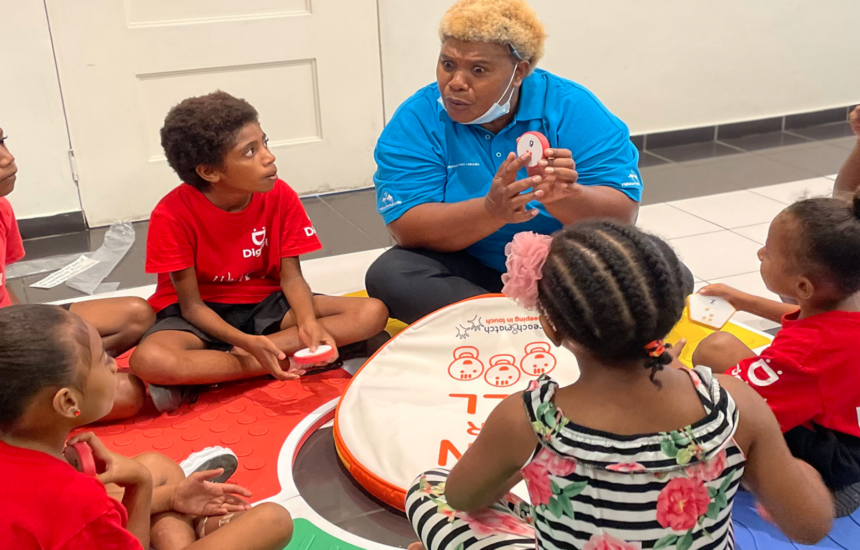
Every child deserves the opportunity to learn, play, and thrive alongside their peers. Yet for many children with disabilities in Papua New Guinea, barriers such as limited specialist services, geographic isolation, and the lasting impacts of the COVID-19 pandemic have made inclusive education difficult to achieve.
These are exactly the kinds of challenges that Reach & Match, an Australian social business, was created to address. Since 2016, the organization has expanded its work across developing countries in Asia and the Pacific, helping educators build more inclusive learning environments through play-based learning, practical teaching strategies, and multisensory resources. Its approach is now being used in schools and early learning settings across Australia, Europe, the United States, and Asia.
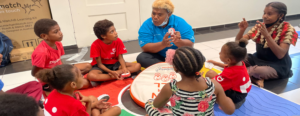
An educator explains the Reach & Match game to students with hearing impairment in sign language.
One inspiring example is Reach & Match’s partnership with UNICEF Papua New Guinea and ChildFund PNG, supported through the country’s Education Emergency Response and Recovery Plan. Together, they are helping teachers create classrooms where children with disabilities are not only welcomed, but are able to actively participate, learn, and flourish alongside their classmates.
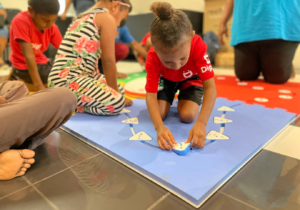
Children participating in the Reach & Match games.
At the heart of the initiative is the Reach & Match® Inclusive Learning System—a research-informed approach that combines tactile learning materials, play-based activities, and hands-on professional development for educators. Introduced across nine Inclusive Education Resource Centres in five provinces, the program gives teachers practical tools they can immediately use to support children with a wide range of learning needs.
What makes the initiative particularly powerful is its focus on empowering local educators. Through a training-of-trainers model, teachers gain the confidence to mentor colleagues and expand inclusive practices within their own schools and communities. Families are also encouraged to become active partners in children’s learning, helping create a culture of inclusion that extends beyond the classroom.
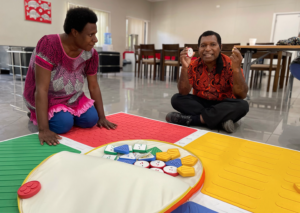
A teacher with vision impairment (in the red shirt) touching and feeling the Reach & Match components.
For many participants, the experience has been transformative. One teacher with a vision impairment shared that the training left them feeling “empowered and confident,” appreciating that the program recognized educators’ strengths rather than focusing on disability. Another teacher reflected on how the multisensory, play-based activities would open new opportunities for children with hearing impairments to engage and succeed.
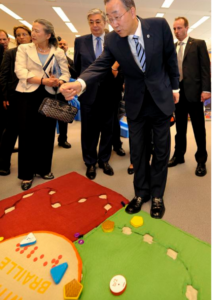
Former United Nations Secretary-General Bam Ki-Moon reviewing the Reach & Match prototype at a UN ECOSOC Innovation Fair. Source: UN Information Service 2011
For Reach & Match founder Mandy Lau, this work reflects a simple but powerful belief: every child learns best when they feel included, valued, and able to participate. Papua New Guinea demonstrates how the right combination of practical resources, teacher support, and strong partnerships can turn that belief into reality.
As Reach & Match continues to grow its work around the world, initiatives like this show that inclusive education does not always require complex solutions. Sometimes, meaningful change begins by giving teachers the confidence, tools, and support to ensure every child has a place to learn, play, and belong.
Across the world, educators, clinicians, and community leaders are developing powerful approaches to supporting children with disabilities — often with creativity and limited resources. “Inclusion Insights” highlights exemplary initiatives in clinics, schools, and hospitals, with special attention to innovations from the Global South that deserve greater recognition and wider learning. If you have suggestions for programs to profile, please reach out to our Communications Director Ashley Nelson at anelson@ceinternational.org.
Explore our last Inclusion Insights on the Ayati Centre in Sri Lanka here.
Explore CE International's consulting services.