
Inclusion Insights: Transforming Childhood Disability in Sri Lanka
Dr. Dilini Vipulaguna, MD; Dr. Thilini Lokubalasuriya, Ph.D
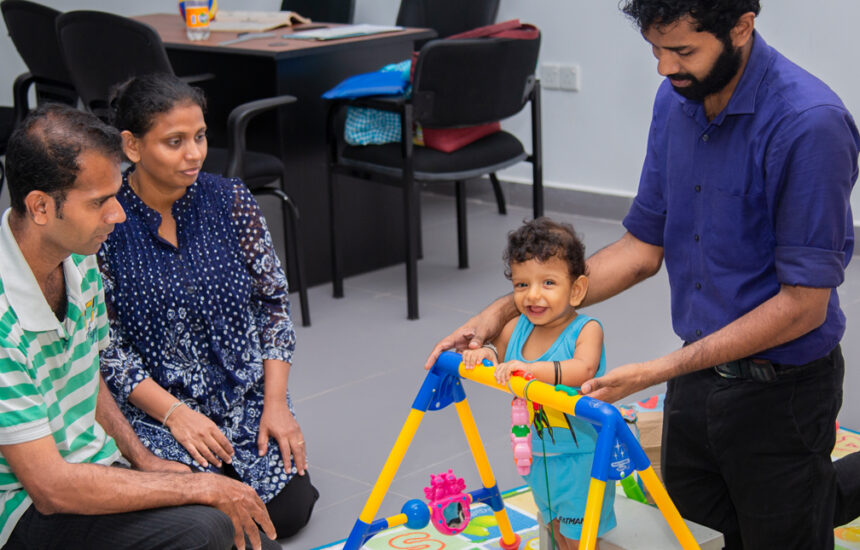
In Sri Lanka, the journey toward rights-based inclusive education has taken a significant step forward with the establishment of the Ayati National Centre for Children with Disabilities. Situated within the University of Kelaniya Faculty of Medicine in Ragama, Ayati is the country’s first national centre dedicated to children with disabilities, bringing together clinical care, education, research, and advocacy under one roof and supporting the delivery of services in the community.
At its core, Ayati is driven by a simple but powerful vision: every child, regardless of ability, deserves the opportunity to reach their full potential and participate meaningfully in society. Established through a unique public–private partnership involving the Ministry of Health, the University of Kelaniya, and philanthropic partners, the centre provides comprehensive services free of charge to children across Sri Lanka, removing major barriers to access.
Ayati’s multidisciplinary model is its defining strength. Children and families can access developmental paediatrics, audiology, speech and language therapy, physiotherapy, occupational therapy, psychology, nursing, and educational support in a coordinated manner. Advanced diagnostic pathways aligned with national guidelines enable early identification and timely intervention. Specialised services, including augmentative and alternative communication (AAC), feeding support, cortical visual impairment management, and orthotic and prosthetic care, are designed to enhance functional independence and quality of life.
Beyond clinical care, Ayati plays a pivotal role in strengthening inclusive education systems. Through regular school visits, multidisciplinary teams work directly with teachers and school leaders to adapt learning environments, improve participation, and address real-world classroom challenges. The centre also builds national capacity by training special education and primary teachers, equipping them with practical, classroom-ready strategies to support diverse learners. In partnership with the university, Ayati contributes to the Special Education Needs Diploma, further strengthening professional expertise. Collaboration with the Department of Examinations ensures reasonable accommodations for children with additional needs, promoting equity within the national education system.
Ayati’s dedication to advocating for and empowering parents is also equally important. Caregivers are supported through counselling, skills training, and guidance to confidently advocate for their children’s rights within schools and communities, ensuring inclusion remains family-centered and rights-based.
At a national level, Ayati contributes actively to policy development and system strengthening, with its experts shaping guidelines and serving on key health and education platforms.
Ayati stands as a model for low- and middle-income countries, a holistic, scalable approach that integrates healthcare, education, and policy, while keeping families at the center to create truly inclusive systems.
Across the world, educators, clinicians, and community leaders are developing powerful approaches to supporting children with disabilities — often with creativity and limited resources. “Inclusion Insights” will highlight exemplary initiatives in clinics, schools, and hospitals, with special attention to innovations from the Global South that deserve greater recognition and wider learning. If you have suggestions for programs to profile, please reach out to our Communications Director Ashley Nelson at anelson@ceinternational.org.
Explore CE International's consulting services.