
From Voice to Influence: How Children’s Participation Can Help Shape the Future
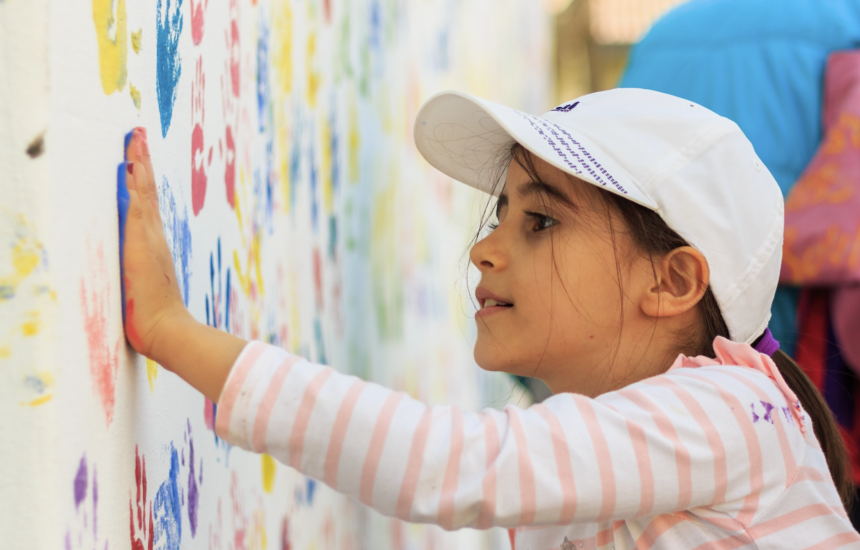
As part of a regular series from the Center for Children’s Futures, an initiative of Childhood Education International, we invite educators, policymakers, advocates, and other thought leaders from around the world to share their perspectives on how we can prepare for the futures children will inherit — and help create.
The views and opinions expressed in this article are those of the author and do not necessarily reflect the views of Childhood Education International.
By Sukran Ucus , Professor in Primary Education, Faculty of Education, Ahi Evran University, Turkey
When we talk about the future, we are usually thinking about children. Decisions being made about such issues as climate change, artificial intelligence, education, and digital life will affect the children of today longer than they will affect most of the adults involved in making those decisions. Yet in many of the rooms where these decisions are made, children are discussed more often than they are consulted; when they are invited in, their presence is often only ceremonial.
We prepare children for the future by teaching them new skills, adaptability, and resilience. Yet a hard question remains unaddressed. Are we preparing children for a future that others have already designed, or are we also giving them real chances to shape it? A generation trained only to adapt to decisions it never influenced risks growing up knowing how to fit in, but not how to have a say.
That question reveals a challenge that extends beyond any single policy field. Those who will live longest with decisions about artificial intelligence, climate, and digital infrastructure hold the least power. Children cannot vote, and they rarely sit on the advisory or regulatory bodies now shaping the world.
One point needs to be made clear, however. Children’s right to participate does not rest on how long they will live with the results; it rests on the rights they hold now. Article 12 of the UN Convention on the Rights of the Child guarantees every child capable of forming a view the right to express it freely in all matters affecting them, and to have it taken seriously in keeping with their age and maturity. General Comment No. 12 (2009) is clear on this point: respecting this right is a legal obligation, not a favor. Listening for show while giving children’s views no real weight does not meet the standard.
More than 30 years ago, Roger Hart (1), in his well-known “ladder of participation,” warned that much of what passes for child participation never rises above its lowest rungs of manipulation, decoration, and tokenism. The ladder has its limits, and UNICEF Innocenti has cautioned against treating it as a hierarchy to be climbed rung by rung. Even so, Hart’s warning rings true. Many school councils must meet budgets, but they do not control them. Youth delegates often address climate summits after the negotiating text has been settled.
All this comes at a cost. Decisions suffer, because children know things adults do not: what makes a classroom humiliating, how an algorithmic feed actually shapes a 12-year-old’s day, which route to school floods first. Trust suffers as well. Children quickly work out whether or not their input mattered. If they experience being consulted and then ignored, they may decide that speaking up changes nothing; researchers call this consultation fatigue. (2) The burden also falls unevenly. Where participation is decorative, the platform usually goes to the most confident and most privileged children, while disabled, displaced, younger, and out-of-school children are left out twice over.
The problem, then, is not that child-serving systems refuse children a voice; many now offer one, at least on paper. The issue is whether what children say is allowed to influence the decision. Left unattended, that gap between voice and influence is repeated as climate adaptation plans, artificial intelligence governance frameworks, and post-crisis school systems are built for children but without children, and consequently will be weaker and less trusted.
If tokenism is the problem, what separates meaningful participation from the symbolic kind? A particularly useful answer comes from Laura Lundy (3) whose model translates Article 12 into practice and has been adopted by Ireland’s national participation framework and the EU Child Participation Platform. She proposes that participation needs four elements:
To achieve meaningful participation, two moves are required. The first move is institutional. One-off consultations should give way to standing mechanisms with real mandates. This can take the form of student bodies with authority over specified decisions and children’s advisory panels attached to ministries and regulators. The second move is to concentrate effort where the stakes for the future are highest. Three arenas stand out.
Artificial intelligence. Algorithmic systems increasingly shape what we learn, see, and experience, and an estimated one in three internet users worldwide is a child. Governance frameworks, including those concerning artificial intelligence, have largely tended to treat children as in need of protection. (4) While protection is vital, it is not the whole story. General Comment No. 25 (2021) confirms that the right to be heard applies fully in the digital environment, which raises questions worth putting to the children themselves regarding what they see as fair, how their data should be handled, and how to challenge a decision made about them. UNICEF’s policy guidance on AI for children (5) points in the same direction, toward systems that are not only safe for children but also, whenever possible, designed with their input.
Climate. The differing stakes between generations are most obvious with regard to climate issues. Today’s decisions about energy, transport, and cities will have effects for decades. Children and young people are highly visible in climate movements, but visibility has not translated into decision-making power (6), and that is where Lundy’s Audience and Influence elements matter the most. General Comment No. 26 (2023) has made children’s participation rights explicit for environmental decision-making. Local climate action plans and school sustainability policies are natural places to start.
Education. Children are not simply the beneficiaries of school systems; they live inside them every day, and they know things about inclusion, safety, digital tools, and assessment that adults often miss. This is not an argument for children setting education policy. Their knowledge should have a place alongside teachers’ expertise and research evidence. The recommended shift, supported by two decades of student-voice research (7,8), is to stop treating children’s views as something to be politely heard and start treating them as knowledge that can improve policy and service design.
There is also a bigger picture emerging with institutions built to represent the long term, from the Well-being of Future Generations (Wales) Act 2015 to Finland’s Committee for the Future and the UN Declaration on Future Generations (2024). These mechanisms tend to represent future people through adult proxies. Yet today’s children are the only members of “future generations” who can speak for themselves. Bringing them in directly, rather than only speaking on their behalf, would make that agenda considerably more concrete.
One caution must be issued. Giving children a voice does not mean handing them adult responsibilities. The climate crisis and structural inequality are problems that adults and institutions are obliged to solve, and the weight of those problems should not be shifted onto those who did not create them. Participation exists to make adult decisions fairer and more answerable, not to replace adult responsibility.
We should be honest about the costs. Meaningful participation is slower than the symbolic kind, it limits decision-makers’ discretion, and it needs safeguarding. But the real comparison is not with efficiency. It is between decisions tested against the knowledge of the people who will live with them, and decisions that were never tested at all.
The steps below do not claim to be a new model; their elements are Lundy’s. They offer a working sequence for schools, health providers, child-protection systems, and policymakers: access, safe space, supported voice, influence on decisions, and feedback with accountability. They apply from the start of the decision cycle as children help define problems and options rather than merely commenting on drafts.
None of this needs to be complicated. Imagine a school deciding whether to adopt an AI-assisted learning tool. It sets up a student panel spanning ages and accessibility needs (access). It meets the panel without vendors or senior staff steering the discussion (safe space). It explains in plain language what the tool does with students’ data (supported voice). It gives the panel a clear mandate to recommend conditions on data use, error appeals, and teacher oversight (influence). And it publishes which recommendations were adopted, with reasons for those that were not (feedback). None of this requires new law, just a willingness to work differently.
Two conditions apply throughout. Article 12 sets no minimum age, so participation should deepen as children’s capacities evolve rather than begin in adolescence. Children can accept a “no” when it is explained; what damages trust is silence. (9)
The future of humanity is not something firmly established that will one day be handed down to children. It is being built now, decision by decision. A better future begins with investment in children. The investment that counts most is made with children, not only for them. Children are entitled to be heard because of the rights they hold today; because they are the only part of “future generations” already able to sit at the table, their participation is where fairness between generations becomes something real. The test for any school, health service, ministry, or technology company is simple: when children speak, does anything change? Until the answer is yes, we risk decorating a future designed without them.
1 Hart, R. A. (1992). Children’s participation: From tokenism to citizenship. UNICEF International Child Development Centre.
2 Stafford, A., Laybourn, A., Hill, M., & Walker, M. (2003). “Having a say”: Children and young people talk about consultation. Children & Society, 17(5), 361-373.
3 Lundy, L. (2007). “Voice” is not enough: Conceptualising Article 12 of the United Nations Convention on the Rights of the Child. British Educational Research Journal, 33(6), 927-942.
4 Livingstone, S., Carr, J., & Byrne, J. (2016). One in three: Internet governance and children’s rights (Innocenti Discussion Paper No. 2016-01). UNICEF Office of Research – Innocenti.
5 UNICEF. (2021). Policy guidance on AI for children. Author.
6 Thew, H., Middlemiss, L., & Paavola, J. (2020). “Youth is not a political position”: Exploring justice claims-making in the UN Climate Change Negotiations. Global Environmental Change, 61, 102036.
7 Mager, U., & Nowak, P. (2012). Effects of student participation in decision making at school: A systematic review and synthesis of empirical research. Educational Research Review, 7(1), 38-61.
8 Mitra, D. L. (2004). The significance of students: Can increasing “student voice” in schools lead to gains in youth development? Teachers College Record, 106(4), 651-688.
9 Lundy, L. (2018). In defence of tokenism? Implementing children’s right to participate in collective decision-making. Childhood, 25(3), 340-354.
Dr. Sukran Ucus is the assistant professor in the Early Childhood Education Department at Ahi Evran University. Her research interests are creativity and creative thinking skills in education, parenting (parent–child relationships, parent involvement and parent–school partnerships), teacher development and social studies for young children.
Disclosure Statement: The author reports no conflict of interest.
Explore CE International's consulting services.